Wednesday, May 6, 2020

Governor Newsom Signs Executive Order Clarifying COVID-19 Is A Presumptive Injury


Today, Governor Newsom signed Executive Order N-62-20. This critical order creates a rebuttable presumption that California’s essential employees who contract COVID-19 did so in the course and scope of their employment if certain requirements are satisfied and thus are eligible for workers' compensation benefits.


Coronavirus - HSA - Stanislaus CountyThe presumption, which is disputable by the employer, pertains to employees that have tested positive or been diagnosed by a licensed physician with COVID-19 within 14 days after a day that the employee performed labor or services at the employee’s place of employment, or at the employer’s direction – but not at the employee’s home or residence. In addition to first responders and health care workers, the new executive order also covers other employees who are working during the COVID-19 pandemic.


Under the Order, the presumption will be in place for the next 60 days and covers claims dating back to March 19, 2020.  Once a COVID-19 claim has been filed, the employer will have 30 days to determine whether to accept or deny the claim. The presumption should eliminate most of the causation fighting that is currently happening between the workers’ compensation insurance carriers, third party administrators and those seeking benefits under the California Workers’ Compensation system. However, it is unclear at this time whether employers will make an effort to challenge this order.


Workers’ Compensation benefits may include medical treatment; temporary disability (or salary continuation under Labor Code section 4850 for public safety) so long as the employee is certified for temporary disability by the treating physician; permanent disability; and/or dependency death benefits. If you are someone you know has tested positive or was diagnosed with COVID-19 within 14 days of performing labor or services at the employee’s place of employment please contact the law office of Mastagni Holstedt for assistance in pursuing workers’ compensation benefits

Tuesday, April 21, 2020

Filing a COVID-19 Workers' Compensation Claim

The pandemic caused by the coronavirus disease (COVID-19) is impacting almost every aspect of Californian lives, including how we live and work.  Every cough, runny nose and even headache can make a person wonder if they have contracted this virus. To make matters worse our first responders and front-line medical personnel continue to perform their essential services to our communities while most Californians are under the protection of a public health directive to shelter in place.

While the general public shelters in place, our first responders face a mounting risk of exposure to COVID-19.  This public health crisis is transforming into an ever-expanding first responder crisis as peace officers, firefighters, and medical personnel contract the virus as they perform their essential services.   Given these facts, the logical question is what will happen to our first responders if and when they contract COVID-19. Does California have a plan for them?


Workers’ Compensation
The purpose of Workers’ Compensation is to provide monetary and medical benefits to people who become injured while working in the course and scope of their job duties. Part of the workers’ compensation process is to separate work related from non-work-related claims. In the context of a disease such as COVID-19, this becomes very difficult to do in practice.

Increased Risk to Exposure
However, there is a recognizable link between the nature of a first responder’s job and an increased risk of contracting the disease. First responders typically encounter a wide variety of exposures at work, including but not limited to bodily fluids, sneezing/coughing, and the unavoidable touching of unclean surfaces. Historically, when dealing with other injuries that first responders face a greater risk of suffering than the public, our State Legislature has acted to create a presumptive injury status for certain injuries. 

Presumptive Injuries
The presumption effectively shifts the burden of establishing causation.  This means the argument switches from the employee’s burden to establish that he suffered an industrial injury to a burden upon the employer.  The employer must rebut that the injury suffered was not from industrial exposure.  For example, there are presumptions for certain first responders who suffer pneumonia, meningitis, tuberculosis, etc.

At present, there is inadequate formal guidance from the State of California as to whether any Workers’ Compensation presumptions would apply to our first responders in the event of a confirmed COVID-19 infection.  In the absence of a presumption, the burden is on the injured first responder to prove that they were at a greater risk of exposure to COVID-19 at the time they contracted the illness. 

Record of Exposure
If a first responder is exposed to an individual whom is believed to have the virus the first responder should attempt to establish a record of known or suspected exposure to COVID-19 at work. This evidence may include information as to the time of the exposure, the location of the exposure, the mechanism of transmission, if known, and any other knowledge or observation of COVID-19 symptomatology present at the workplace. This information must be communicated to the employer as well.

In addition to providing information about any potential exposure to COVID-19, the injured first responder must provide medical evidence that they have actually sustained an infection. The preference is medical testing. However, in the absence of test results, there will need to be a diagnosis from a licensed physician of a suspected COVID-19 case. In addition to the diagnosis itself, relevant medical information includes any medical evidence which tends to show that COVID-19 was accelerated, aggravated, or precipitated by job duties. 

The bottom line is that establishing a causal relationship generally requires a qualified physician's opinion, based on a reasonable degree of medical certainty, that the diagnosed condition is causally related to your employment. This opinion must be based on a complete factual and medical background. However, the ubiquity of COVID-19 presents unique challenges to the standard causation formula. How consistently can we prove the circumstance of work-related exposure to COVID-19 in an environment where the virus is known to be extremely contagious, relatively unseen, and transmitted by means we are only beginning to fully comprehend?  The fear is, without a presumption, we simply will not have the tools needed to consistently provide benefits to our first responders despite their daily heroism on the front lines of this disease.

However, Mastagni Holstedt, APC is asserting that injuries caused by a COVID-19 exposure and/or infection should fall under one of the existing public safety presumptions.  The legislative intent behind the creation of a public safety presumptive injury in the California Labor Code is to offer additional protection to first responders who put their lives at risk for the public’s benefit. The risk they take while assisting the public through the COVID-19 pandemic is no different.

Creating a COVID-19 Presumption
It remains to be seen if Mastagni Holstedt will prevail in our arguments that one or more of the existing presumptions should be extended to cover injuries caused by COVID-19 because at the time the presumptions were codified COVID-19 did not exist.  However, there are separate efforts underway to create a new presumption in law.  Fire fighter and law enforcement advocates, such as the Peace Officer Research Association of California (“PORAC”) and the California Professional Fire Fighters ("CPF"), have urged California Governor Gavin Newsom and the State Legislature to create a presumptive injury for our first responders exposed to or inflected with COVID-19. These efforts are ongoing. 

The State Legislature is currently debating Assembly Bill No. 664 which seeks to define “injury” for certain state and local firefighting personnel, peace officers, certain hospital employees, and certain fire and rescue services coordinators to include being exposed to or contacting a communicable disease, including COVID-19.  The proposed bill would create conclusive presumption, as specified, that the injury arose out of and in the course of employment.

The fear is, without a presumption, we simply will not have the tools needed to consistently provide benefits to our first responders despite their daily heroism on the front lines of this disease.  With that said, at Mastagni Holstedt we continue to represent our first responders and will vigorously litigate on their behalf for an extension of the existing presumptive injuries.

If you or someone you know needs help with this fight please contact Mastagni, Holstedt, A.P.C. for an advocate who supports what you do for our communities and who will fight this legal battle with you.

Wednesday, April 15, 2020

California Supreme Court Sets Oral Arguments for Pension Appeals

Today the California Supreme Court set oral arguments in the Alameda County Deputy Sheriff’s Association pending appeal, which is consolidated with several other employee organizations, challenging the constitutionality of the Public Employee Pension Reform Act (PEPRA) as it applied to certain plan members under County Employees Retirement Law of 1937 (CERL). 

Arguments will be heard on May 5, 2020, at 9:00 a.m. via  video or teleconference.  The case is captioned,  Alameda County Deputy Sheriff’s Association v. Alameda County Employees’ Retirement Assn. (Cal. 2018) 230 Cal.Rptr.3d 681.  The Alameda DSA is represented by Mastagni Hosltedt, APC, attorneys  David E. Mastagni and Isaac S. Stevens.


Monday, April 13, 2020

Listen NOW: Mastagni Holstedt's Brendan Rochford Interviewed By Ride Along Radio Regarding Need For COVID-19 Workers Compensation Presumption

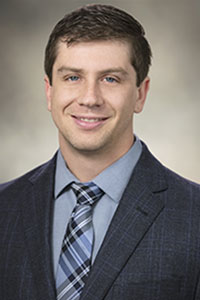
On Thursday, Mastagni Holstedt's own Brendan Rochford was interviewed by Ride Along Radio. Listen to the interview below as Brendan outlines the need for legislation to ensure that COVID-19 becomes a presumptive injury under California's Worker Compensation System.


Ride Along Radio Show - Home | Facebook


Friday, February 14, 2020

Mastagni Holstedt Wins Cancer Presumption Exception for Imperial County Probation Officer

In California Workers’ Compensation law, injured workers must normally prove the alleged injury was caused by their job duties (to the standard of a reasonable medical certainty). Over the years, the California legislature has recognized the unique and demanding job duties public safety officers and other first responders face and outlined specific, presumptive injuries. This was done in an effort to make Workers’ Compensation claims and treatment process quicker. One such presumption is cancer. However, each presumption specifically designates who will qualify as a matter of law. These designations are not normally subject to review by the courts. Furthermore, probation officers are categorically excluded in the statutory language of the cancer presumption.

CareersNotwithstanding the statutory exclusion,  Mastagni attorney Brendan B. Rochford successfully argued for an exceptional application of the cancer presumption (William Dallas Jones Cancer Recovery Act (“Act”)), otherwise known as Labor Code §3212.1, to Imperial County Probation Manager Iran Martinez. Raising multiple factors, Mr. Rochford successfully demonstrated Martinez was performing the usual and customary duties of a special agent for the State of California as classified in PC 830.1(b), entitling him to the cancer presumption. The Workers’ Compensation Appeals Board of San Diego agreed and granted Officer Martinez an exception to the presumption. This should soon result in Martinez receiving the benefits for an accepted cancer claim.

The presumptions set forth in Labor Code §3212.1  apply to peace officers sworn under Penal Code §830.1, not to peace officers sworn under Penal Code §830.5. Probation officers in California are sworn under Penal Code §830.5. Attorneys for the County of Imperial argued Officer Martinez’ sworn status precluded him from eligibility under the Act. Relying on Reeves v. ­­­­WCAB, Mr. Rochford countered that Officer Martinez’ job duties as a Narcotics Task Force Officer/Special Agent were also critical factors in the Court’s analysis.

The Court agreed and found that Officer Martinez’ job duties, along with other circumstances including his training, equipment, and title of “Special Agent Martinez,” entitled him to classification as a special agent under Penal Code §830.1(b). After reviewing the deposition of the doctor, the Court further agreed that Officer Martinez’ entitlement to the presumption should clear the way for Workers’ Compensation benefits due to the nature and timing of his injuries. It is on this basis that an order was issued compelling Worker’s Compensation benefits. The decision recognizes the inequity of ordering a probation officer to perform traditional police duties that place them in harm’s way, without affording them the same Workers’ Compensation benefits enjoyed by other PC 830.1 (b)members of the Task Force.

This case speaks to the importance of not giving up on a serious Workers’ Compensation claim simply due to a denial of the presumption based on Penal Code designation. The actual job duties performed at work are crucial factors in determining whether you will be found eligible for a Workers’ Compensation presumption. A consultation with an experienced Workers’ Compensation attorney may be the difference in qualifying for Workers’ Compensation benefits under a public safety presumption.

This decision was recently signed by Workers’ Compensation Judge Wade DiCosmo on January 31, 2020. Defendant enjoys a right to file a Petition for Reconsideration. Updates to be provided accordingly.

Brendan Rochford is a valuable member of the Mastagni Holstedt, A.P.C. team, successfully litigating Worker’s Compensation claims for public safety officers throughout California. As demonstrated by his success in this case, he is well versed in applicable presumptions. He is based in Rancho Cucamonga and regularly appears at the Worker’s Compensation Appeals Boards in San Diego, Riverside, San Bernardino, Pomona, Van Nuys, Santa Barbara, Anaheim, Santa Ana, Los Angeles, Bakersfield, Oxnard, and San Luis Obispo.


Tuesday, November 19, 2019

Mastagni Holstedt Gets PERB Complaint for Employer Refusal to Provide Information


Mastagni attorneys Kathleen Mastagni Storm and Chelsea Avent recently got a Public Employment Relations Board (“PERB”) Complaint issued against the County of Kern for refusing to provide relevant information to Kern County Fire Fighters Association, Local 1301. PERB concluded the County violated the Meyers-Milias-Brown Act by withholding the information from Local 1301.

For over a year, the County dragged its feet and engaged in bad faith bargaining. In July 2018, Local 1301 and the County began negotiations for a successor Memorandum of Understanding (“MOU”). The bargaining ended in a mediation and a fact finding hearing between the parties. Local 1301’s chief negotiator Robbie McCandlish and attorney Howard Liberman’s hard work during the hearing got a favorable fact finding report for Local 1301. The report noted the County had over $180 million in reserves, Local 1301 were the lowest paid personnel in the surveyed departments, and that members have seen minimal to no pay increases since 2008.


During bargaining, the County told Local 1301 it intended to cut approximately three million dollars from the Fire Department’s overall budget. The County insisted on concessions from Local 1301. Local 1301 decided to seek out alternative cost saving proposals in an effort to mitigate the harm a pay cut would have.

Beginning in October 2018, Local 1301 requested information regarding healthcare plans, member information, and claim details to obtain health care cost quotes from outside companies to formulate its proposals for group insurance plans during bargaining.

Between December and April 2019, the County slowly provided different variations of aggregate information for enrollment count, number of dependents, workers’ compensation claims, and annual medical claims. Local 1301 continued requesting the specific information and attempted to work with the County to find an agreeable way to provide the information that would not allow the identification of any members. It was not until April 2019 the County finally told Local 1301 it could not provide the information claiming it could violate health privacy laws.

PERB’s Complaint concluded the County refused to provide information relevant and necessary to Local 1301’s discharge of its duty to represent employees. Further, the County violated the MMBA by refusing to meet and confer in good faith over the requested information, interfering with members’ rights to be represented, and interfering with Local 1301’s right to represent members.

This decision confirms an employer’s duty to either supply relevant information or timely and adequately explain why it cannot provide the information. Even if the employer ultimately provides the requested information, it will not excuse an unreasonable delay.  An employer’s refusal to provide information amounts to bad faith bargaining in violation of the MMBA.


Tuesday, November 5, 2019

Delays in Obtaining Medical Treatment


First, it is important to note that securing medical treatment under a workers’ compensation claim is procedurally quite different than treating with one’s family doctor. When a patient receives a prescription for medication or any other form of treatment under private insurance, the patient usually expects the pharmacy to fill the prescription immediately. However, within the context of a workers’ compensation claim, merely obtaining a prescription and presenting it to the pharmacy may not be sufficient to ensure the employer will be responsible for the cost of that prescription.

In fact, if one attempts to procure treatment for a work injury as if it were a non-work-related condition, that persons runs the risk of becoming financially responsible for the treatment at issue.
Naturally, steps should be taken, when possible, to avoid that undesirable outcome.

Ensuring the employer’s insurance company is financially responsible for medical treatment begins with adhering to and considering the necessary steps of the mandatory Utilization Review process.

What is Utilization Review?
For all work-related injuries occurring after January 01, 2013, pursuant to SB 863, all medical treatment requests under workers’ compensation claims must be submitted to Utilization Review. 

It should be noted that Utilization Review has an extensive legislative history in the State of California and is implicated by many sources of law. Those sources include but are not limited, to Assembly Bill 749, Senate Bill 899, and are further codified in California Labor Code Sections 4062 and 4610.

Utilization Review applies within the first 90 days of filing a claim, also known as the investigation period allocated to the Employer, but the Employer is only responsible for the cost of reasonable medical treatment, up to $10,000.00, during that 90-day-period. After the first 90 days, the insurance company must have accepted liability for the claim/body part for which treatment is being sought, prior to there being a possible application of utilization review.

If your claim is denied or even if it has been accepted, it may be an appropriate time to seek legal counsel to facilitate administration of a claim for a workplace injury.

Initiating Utilization Review
The purpose of utilization review is to answer the question of whether treatment is medically necessary according to the relevant treatment guidelines. The possible answers to that question are: yes (“certified”); no (“non-certified”); or in-part yes or no (“modified”).

If the Employer requests Utilization Review, that request is first triggered based upon steps taken by an injured worker’s Primary Treating Physician.

Primary Treating Physician (“PTP”) is a defined term by law and is the doctor designated in advance with the Employer to fulfill the duties indicated in California Code of Regulations Section 9785, among others. Some of those duties will be outlined below and are much different than those a private doctor would need to follow.

On that note, choosing a PTP may be an appropriate topic of discussion with an attorney.
Further, if liability for a workers’ compensation claim or any aspect thereof has been accepted, an injured worker’s PTP, requesting treatment, must submit a Request for Authorization (“RFA”) and Physician Progress Report (“PR-2”).

The RFA is a state required form specific to the purposes of requesting treatment under a workers’ compensation claim. The RFA is mainly a claim demographic form, identifying the injured worker, workers’ compensation insurance carrier, and the PTP. However, and importantly, the RFA also includes the name and diagnostic codes of the specific treatment being requested in terms of quantity, frequency, and duration. The PTP must sign the RFA and transmit it along with the PR-2 (progress report) to the workers’ compensation insurance carrier to request medical treatment.

It is important to note that those steps, although necessary, do not guarantee whether the outcome of utilization review is certified; non-certified; or a modification. Further, a utilization review decision on the basis of any one RFA and PR-2 does not necessarily mean that future RFAs and PR-2s will result in the same decision (i.e. certified; non-certified; or modified).

Similarly, if treatment is approved or approved-in-part, the workers’ compensation insurance carrier will be financially responsible for the approved portions of request(s) associated with a given RFA and PR-2. So, since any approved portions stem from one RFA and PR-2, the PTP will have to complete subsequent RFAs and PR-2s for any future treatment requests. Thus, once the PTP transmits a RFA/PR-2 to the workers’ compensation insurance carrier, timing issues must then be considered.

Timing Under Utilization Review:
The gist of these timing elements, for better or worse, often amounts to delay in obtaining medical treatment.  California Labor Code 4610(g)(1) provides that a utilization review decision must be made within 5 working days from the receipt of information reasonably necessary to make the determination, but in no event more than 14 days from the date of the medical treatment recommendation by the physician. Further, California Labor Code 4610(g)(3)(A) requires that a decision be communicated to the physician within 24 hours of the decision and in writing within two business days to the physician, employee, and if represented, legal counsel as well.

These timing provisions apply to the workers’ compensation insurance carrier that receives an RFA and PR-2 from an injured worker’s PTP. The timing provisions may seem a disadvantage to persons who expect to obtain treatment in the same manner as from one’s family doctor. However, the timing issues presented by utilization review may provide guidance in developing a treatment plan for a work injury.

Failure by a carrier to timely respond to all RFA’s and PR-2s (i.e. to conduct utilization review) means that medical necessity is an issue that may be properly decided by the Workers’ Compensation Appeals Board, based upon substantial evidence. Thus, if an injured worker believes that an RFA and PR-2 has not received a timely response then it would be appropriate to seek legal counsel to discuss the propriety of pursuing the matter further before the Workers’ Compensation Appeals Board, or otherwise. However, if a utilization review decision is timely, but the decision is denial of treatment or modification then an injured worker’s sole remedy is to file for Independent Medical Review (a topic to discuss further with an attorney).

Concluding Remarks:
Obtaining medical treatment under a workers’ compensation claim is more complicated than simply taking a prescription to the pharmacy and can often be a source of delay. However, working with one’s workers’ compensation PTP and/or legal counsel are ways to help facilitate treatment.
It is important to note that this article is not an exhaustive explanation of all nuances pertaining to utilization review.

This article is intended to provide only general information regarding the procedural steps and timing issues that must be considered when pursuing medical treatment under workers’ compensation.
If you have suffered a work injury or are considering legal representation related to workers’ compensation issues, please contact our office at (916) 446-4692 for a free consultation.

Monday, July 1, 2019

“You Don’t Look Disabled” - How Representation Can Help You Navigate Inherent Bias and Other Pitfalls in Social Security Disability Hearings


If you are denied Social Security Disability Insurance or Supplemental Security Income benefits after an initial application and reconsideration, you have a right to request a hearing within 60 days. Your case will be heard by an Administrative Law Judge (ALJ), an independent trier of fact who is not bound by the opinions of the medical evaluators who decide disability claims at the initial levels of review. The Social Security Office of Hearing Operations is one of the largest administrative law systems in the world, employing approximately 1,700 judges throughout the nation and its territories. While an administrative law hearing is much less formal than a superior court hearing, and while the Social Security disability determination process is non-adversarial, it can nevertheless be fraught with pitfalls for some applicants. 

Many applicants successfully apply for benefits without the aid of a representative, but a seasoned advocate can help others navigate these challenges and put their best case forward at a disability hearing before an ALJ.

Young applicants have a harder time securing benefits than older applicants.  Anyone under the age of 50 is considered a ‘younger person’ in Social Security’s regulatory scheme.  There are literally fewer paths to a finding of disability for younger applicants. For example, the agency has promulgated rules in a series of tables known as the Medical-Vocational Guidelines (also referred to as “the grids”). Each rule sets forth specific combinations of vocational factors (your functional capacity, age, education, and work experience) that determine whether the agency will expect you to perform other work if you cannot return to your previous work. Where your factors match the criteria of a rule, the agency grants benefits under a medical-vocational allowance. 

However, of the more than eighty grid rules, only one creates a presumption of disability for younger claimants. This disparity suggests that the system is designed primarily with older applicants in mind. Indeed, because young people are generally more vital and resilient, they are typically not disabled by disease or injury at the same rates as older applicants. This fact underlies a predictable bias against younger applicants, that an advocate can address in the presentation of your case.

Another all-too-human bias affects the way claimants without obviously visible impairments are perceived. It is difficult to predict how functional a person is just by looking at their medical records. Conversely, it is just as difficult to tell how limited someone is just by looking at them.  Hence, the hearing provides an opportunity for the ALJ to scrutinize claimants for the credibility of their allegations. An obvious difficulty presents when the signs and symptoms of a debilitating impairment are not readily apparent. Someone with debilitating mental impairments, for example, might appear physically hale.  A good disability advocate will tailor a hearing presentation to stress the elements of a claim, and address potential biases where the claimant’s limitations aren’t visually obvious.

Drug war era legislation amended the Social Security Act so that disability benefits cannot be awarded where a claimant has a drug or alcohol abuse disorder and would not be found disabled but for that disorder.  In a case with active substance abuse, the ALJ must perform a subtler analysis to determine if a claimant would still be disabled if they stopped abusing drugs or alcohol.  The analysis is tricky and misapplication of the rule is a significant source of remands. Given the federal government’s zero tolerance policy against drug abuse, it is no surprise that most ALJs are wary of drug using applicants and often misinterpret evidence of drug use as evidence inconsistent with disability, rather than a predictable consequence of mental stressors. Clients with dual diagnoses are especially vulnerable to this kind of bias, and are best served by an advocate that can make a case that their underlying mental disorders would still be disabling in the absence of drug abuse. 

What most applicants don’t know is that the hearing itself is intended to allow a claimant to comment on all evidence in their file that is considered ‘inconsistent with disability.’ A well prepared ALJ will question a claimant about such evidence in all hearings. However, the agency is notoriously backlogged and ALJs are not always well prepared. An effective advocate will review the file ahead of a hearing and identify inconsistent evidence, so that a claimant has the opportunity to be heard on issues such as the failure to pursue a recommended treatment or take narcotic pain medication despite significant pain complaints, or reconciliation of alleged hobbies such as sports with a claimant’s actual physical capabilities.  It is often helpful for a representative to address inconsistent evidence in their hearing brief as ALJs must consider this evidence when making a credibility determination. 

If you are unsure whether representation would benefit your Social Security claim, contact Mastagni Holstedt, APC for a free consultation. Only thirty percent of claims are approved at the initial application stage, and many applicants are discouraged from appealing because of the wording of denial letters. But approval chances improve as a claim progresses through the different levels of appeal, and the biggest opportunity for advocacy comes at the hearing level.  Having an advocate at your side when you make your case to an ALJ improves your odds of prevailing because an experienced representative will know how to prepare a case that is specific to your needs and the content of your evidence. 

Thursday, June 20, 2019

READ NOW: Mastagni Holstedt Representing Deputy Harmed in Altercation during NBA Championship Celebration

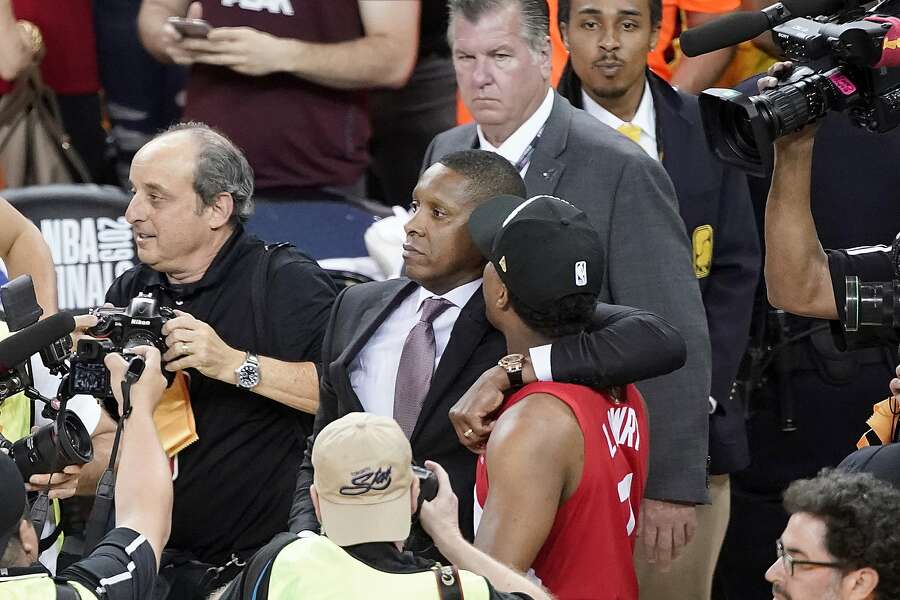
Raptors Team President--Masai Ujiri, pictured above. 

An Alameda County sheriff’s deputy who was pushed and hit in the face by the Toronto Raptors’ president last week after winning the NBA championship, has sustained a serious concussion and is currently on medical leave from work.

David P. Mastagni, founder of Mastagni Holstedt, is representing the Deputy. As reported in the San Francisco Chronicle, and numerous other media outlets, “[it] was an unprovoked hit in the jaw causing a serious concussion and serious jaw injury. ” At the moment, Oakland police are conducting a thorough investigation. After that, "all options are on the table.” According to David P. Mastagni, the Deputy “wants to regain his health and go back to work.”

The entire San Francisco Chronicle Article is available here.

Friday, March 29, 2019

Settlements

The Workers’ Compensation system is a limited benefits system that can extend for months, or even years, before any discussions of settlement occur. Before settlement discussions, a doctor must determine that an “applicant” is permanent and stationary, meaning he or she is not expected to get better or worse within the next year. An applicant is the party that opens a case at the local Workers’ Compensation Appeals Board by filling out an application for adjudication of claim after they suffer a work-related injury. Once an applicant is permanent and stationary, a large percentage of Workers’ Compensation claims are settled by Stipulations with Request for Award or by a Compromise and Release.

Stipulations with Request for Award 

Stipulations with Request for Award is a settlement that occurs when the parties agree to all the issues, resulting in an award of permanent disability and future medical care.  An award for future medical care is appealing to many applicants because it is a way of avoiding having to pay ongoing, out-of-pocket medical expenses for a work-related injury. Settling by way of Stipulations with Request for Award is also beneficial in that an applicant may petition to reopen their Workers’ Compensation claim within five years from the date of injury in case of a new or further disability or an increase in the disability of the original injury.   

When drafting a Stipulation with Request for Award, certain information is required, including the date of the accident, the nature and extent of the applicant’s disability, the amount paid or due on account of compensation, and the duration of any further payment.  A settlement award must also account for any lien claimants.  Any third party that may have provided benefits to an applicant that should have been provided by the Workers’ Compensation system has a right to a lien on a settlement award. 

Once the stipulations settlement is drafted, the parties will meet with a Workers’ Compensation judge in a walk-through process to finalize the process of getting the settlement agreement approved.  If the settlement terms are found to be consistent with medical records and evidence, a Workers’ Compensation judge will approve the stipulation, making the agreement binding on the parties. A Workers’ Compensation judge will also review a settlement to ensure that the defendants are given credit against a settlement award if disability compensation was advanced to the applicant.

Compromise and Release

A Compromise and Release is a settlement that terminates an employer’s liability for a work-related injury in exchange for a lump sum paid to the applicant.  Unlike a Stipulation with Request for Award, a Compromise and Release usually does not provide future medical benefits.  However, both types of settlements have virtually the same filing and format requirements and both must be accompanied by the same information regarding adequacy of award and proof of service on any and all lien claimants.  (See LC §5003).
           
The terms of a Compromise and Release are listed in the settlement. The agreement must be witnessed by two disinterested witnesses or by a notary public.  A Compromise and Release must also be signed by all attorneys prior to being presented to a Workers’ Compensation judge for approval. A signed Compromise and Release is then presented to a Workers’ Compensation judge for review of adequacy of benefits being awarded to the applicant.  (See LC §5001). 

Signing away the right to future medical benefits is a serious decision, so a Workers’ Compensation judge will want to ensure that an applicant understands that they will bear the costs to treat their injury once the settlement is approved. When an applicant has representation, he or she is protected by their attorney who will ensure that an informed decision is made and ensure that the settlement is adequate for purposes of a Workers’ Compensation judge’s approval.  An unrepresented applicant has no such advocate therefore their settlements typically receive greater scrutiny by the judge, which can cause settlement proceedings to be delayed.  However, a Workers’ Compensation judge will generally find a Compromise and Release adequate and order approval if the settlement amount is supported by medical reports and other evidence.

Of course, each individual case will have its own set of facts, which will dictate what options an applicant may have.  The above explanation is a broad overlook of what the two main types of settlements look like under the Workers’ Compensation system but the information is not exhaustive.

The Workers’ Compensation system can be confusing and an applicant may not understand his or her rights after they are injured on the job.  A beneficial solution to getting questions answered is to obtain a Workers’ Compensation attorney.  A Workers’ Compensation attorney knows the labor code and can help navigate through the Workers’ Compensation system and explain in plain terms what the process is for settling a worker’s compensation claim. 

Mastagni Holstedt, A.P.C. is the largest firm in Northern California that represents applicants and offers a complimentary consultation to those seeking representation.  If you have been injured at work and want to discuss your case and the possibility of representation, please call our office at 916-446-4692 to set up an appointment with a Workers’ Compensation attorney.

Thursday, February 28, 2019

Disability Benefits

If you're injured and unable to work, there are several state, federal, and private benefit programs that may be available to help you.  However, navigating and differentiating these programs can be difficult, especially when you're injured and in pain.  And the fact that many of these very different programs sound nearly identical (e.g. SSDI, SSI, and SDI) only make it harder. My goal here is to provide some of the most common programs, explain broadly the differences between them, and discuss their requirements in general.  Please note that all of these programs are complicated, and you are best to seek legal assistance when determining which programs are available to you.

Social security disability is the name for two similar federal programs: Social Security Disability Insurance (SSDI) and Supplemental Security Income (SSI). For both of these programs, you must show that you are unable to work for 12 months or more. SSDI also requires that you have paid into the Social Security system, and that your injury occurs while you are still "covered" by that system. If you are approved for SSDI benefits, then you should begin to receive your full retirement amount from around the date of your disability, subject to some certain restrictions. Even if you haven't paid into the Social Security system, you may still be eligible for SSI. SSI requires that you have limited assets, as calculated by the Social Security Administration. If you approved for SSI benefits, you will receive a monthly payment (for 2019, this payment, for an individual, is $771.00).       

State Disability Insurance (SDI) is a state (California) program, run by the state Employment Development Department (EDD) that provides temporary benefits for persons unable to work due to an illness or injury (it also provides some benefits for maternity leave). These benefits typically, but not always last for one year. In order to qualify for SDI, you generally must get certification from your qualified health care provider regarding your diagnoses, recovery time, etc. EDD also runs a similar program for those persons unable to work not because they are injured, but because they can't find a job: unemployment.

Workers' compensation is another program that can provide benefits if you are injured at work.  These benefits can include medical treatment, payments for lost wages, and lump sum payments for future medical care. Some of these benefits can be referred to as total or partial disability, which should not be confused with State Disability Insurance, or Social Security Disability. The workers' compensation system can be difficult to navigate, and legal assistance is recommended.

There are also private long term and short-term disability programs, that you may have enrolled in yourself, or have been enrolled in by your employer. Again, although these programs are disability programs, they are distinct from the government and administrative programs described above. The benefits provided by these programs vary, and you can get more information about any programs that you may be eligible for from the program administrator or your human resources department.

Often, you may be eligible for more than one of these programs. It's not uncommon for someone hurt at work to receive workers' compensation benefits, state disability benefits, and social security benefits. However, these programs can interact with each other in complicated ways, and may even affect the payments that each program pays to you. For this reason, and others, it is always a good idea to seek legal assistance when dealing with these programs.

Thursday, January 10, 2019

The Basics - Workers' Compensation

Workers' Compensation  What is it?

If you get hurt on the job, your employer is required to provide workers’ compensation benefits. To be covered by workers’ compensation, the injury must occur while in the course and scope of performing your job duties, or arise out of the performance of your job duties.

There are two types of injuries; specific or cumulative. 

Specific: A specific injury is an injury that occurred at one instance or occurrence.
            Example: Trip and fall.   

Cumulative: A cumulative injury is an injury that has built up over time. 
            Example: Repetitive motions causing injury, such as carpal tunnel. 

Workers’ compensation covers some, but not all psychological injuries caused by your job. The injury must be at least 51% industrial (meaning the injury was caused by work). 

It’s a Work-Related Injury – What’s Next?


After suffering an injury, you must notify your employer and file a claim. 

To file, you must complete a DWC-1 Form (https://www.dir.ca.gov/dwc/DWCForm1.pdf).  Claims are distinguished on occurrence of injuries rather than parts of the body injured or types of injuries. 

The current statute of limitations for filing a claim is 1 year from the date of injury or awareness of injury. It’s important to file a claim to preserve your right to benefits. 

You’ve Filed a Claim – What are the Potential Benefits?


Medical Care 
Your employer pays for medical care for your work-related injury or illness. Medical care is determined by medical treatment guidelines. Medical care that is “reasonably required to cure or relieve” the effects of the injury. 

Initially, your claim may go under review for 90 days. During review of your claim, necessary treatment is authorized up to $10,000. 

Temporary Disability Benefits
If your injury prevents you from doing your usual job while recovering, you may be eligible for Temporary Disability (TD) benefits. TD benefits serve as a partial reimbursement of lost wages due to your injury. 

Loss of wages can occur when your treating doctor indicates you are unable to return to work or the doctor believes you may work but only with restrictions, and your employer cannot accommodate your restrictions. 

Permanent Disability Benefits
Permanent Disability (PD) provides for payments if you don’t completely recover. This occurs when your treating doctor believes you will never recover completely or will be limited in your capacity at work. You may then be entitled to a PD award.
 
Supplemental Job Displacement Benefit
This benefit will come in the form of a voucher to help pay for educational retraining and/or skill enhancement, at eligible schools. This voucher can be used for tuition, fees, books, or other expenses required by the school. 

In California, you may also be eligible for a one-time cash payment through the Return-to-Work Supplemental Program. 

Death Benefits
This benefit will provide payments to your spouse, children or other financial dependents, if you should die from a work-related injury or illness. 

Generally, a dependent would need to commence proceedings for the collection of death benefits within a year from the death of the injured party.

Still Have Questions?


Please understand this is a brief overview of the workers’ compensation system and does not contain all information and materials necessary to assist you in a worker’s compensation case. Each applicant and case will have a different set of facts and circumstances. 

If you wish to seek legal advice, have any questions or seek further information, please do not hesitate to contact our office online or by phone at (916) 446-4692.

Wednesday, December 26, 2018

Treating Your Work Injury – The Role of a Primary Treating Physician

You got hurt at work. Now what? 
Getting quality medical care is your top priority after suffering an injury or illness. Nothing is more important than one’s health.  However, obtaining medical treatment under the California Workers’ Compensation system can be challenging to say the least.

What can you do?
Pick a great doctor. Sometimes that’s easier said than done. Your Primary Treating Physician (PTP) is the medical professional who will provide care for the relief of your industrial injuries. Their role in the outcome of your case will significantly impact the benefits you receive. 

Your PTP will not only diagnose your condition and address if the injuries were caused by your work, but they will also request approval for your treatment. Your PTP may refer you to other medical specialists as needed for the care and relief of your injuries. Additionally, your PTP will advise the insurance carrier/your employer if and when you need time off of work to recover or if modified duty work is possible. Finally, your PTP will create a medical history that will play heavily into future determinations of any lasting limitations or permanent disability you may have suffered due to your industrial injuries. In short, selecting a good PTP is crucial to not only the care of your injuries, but also your workers’ compensation case in its entirety.

How do you pick a Primary Treating Physician?
Hopefully, you have predesignated your PTP or a qualified medical group. Under the existing California Labor Code ((§§ 4600, 4600.3 (2018)), you may predesignate your PTP if you have followed detailed rules about such a selection (see DWC Form 9783 to make your pre-designation).  However, most of us haven’t taken advantage of this flexibility afforded under the Labor Code, so your PTP selection will generally be limited by your employer’s Medical Provider Network (MPN). 
When your employer/its insurance company has established a MPN, you’ll generally have to choose a doctor in that network. However, after the first 30 days post injury (Cal. Labor Code §§ 4600, 4600.3, 4616.3), you will be able to select a PTP of your own choice within the MPN. 

Need Help?
If you’re having problems with medical issues in your workers' compensation case such as dissatisfaction with the care you've been receiving, disagreement with your doctor’s opinions about your diagnosis or work limitations, or the insurance company is failing to respond to the doctor’s recommended treatment, it would be beneficial to schedule a consult with Mastagni Holstedt.
Mastagni Holstedt can help you navigate the complicated process of changing doctors and fighting for approval of necessary medical care. We may also be able to recommend good PTPs who understand the complexity of the California workers’ compensation system. Contact us today to see how we can help.